




Company
How to Trade Perps in Trust Wallet: A Step-by-Step Guide
Share post
In Brief
Discover how to trade perpetual futures in Trust Wallet. Learn about leverage, liquidation risks, and smart trading strategies for crypto perps.

Key Takeaways:
Perpetual futures let you trade crypto price movements with leverage and no expiration dates. Higher leverage means a higher risk of losing your entire margin through liquidation.
Liquidation occurs when losses reduce your margin below the maintenance level.
Trust Wallet enables perpetual trading through decentralized exchanges. You keep full control of your private keys, combining advanced trading features with self-custody security.
Perpetual trading has become one of the most popular ways to trade crypto. Perpetual futures (perps) let you bet on price movements without owning the underlying cryptocurrency. You can profit whether prices go up or down, and you never have to worry about contract expiration dates. Trust Wallet now gives you access to perpetual trading directly from your self-custody wallet, combining the power of advanced trading with the security of keeping your private keys. This guide will walk you through everything you need to know about trading perps in Trust Wallet.
What is Perpetual Trading?
Perpetual trading, commonly called "perps," involves trading derivative contracts that track the price of crypto assets. Think of it like making a bet on whether Bitcoin or Ethereum will go up or down, without actually buying the coins themselves.
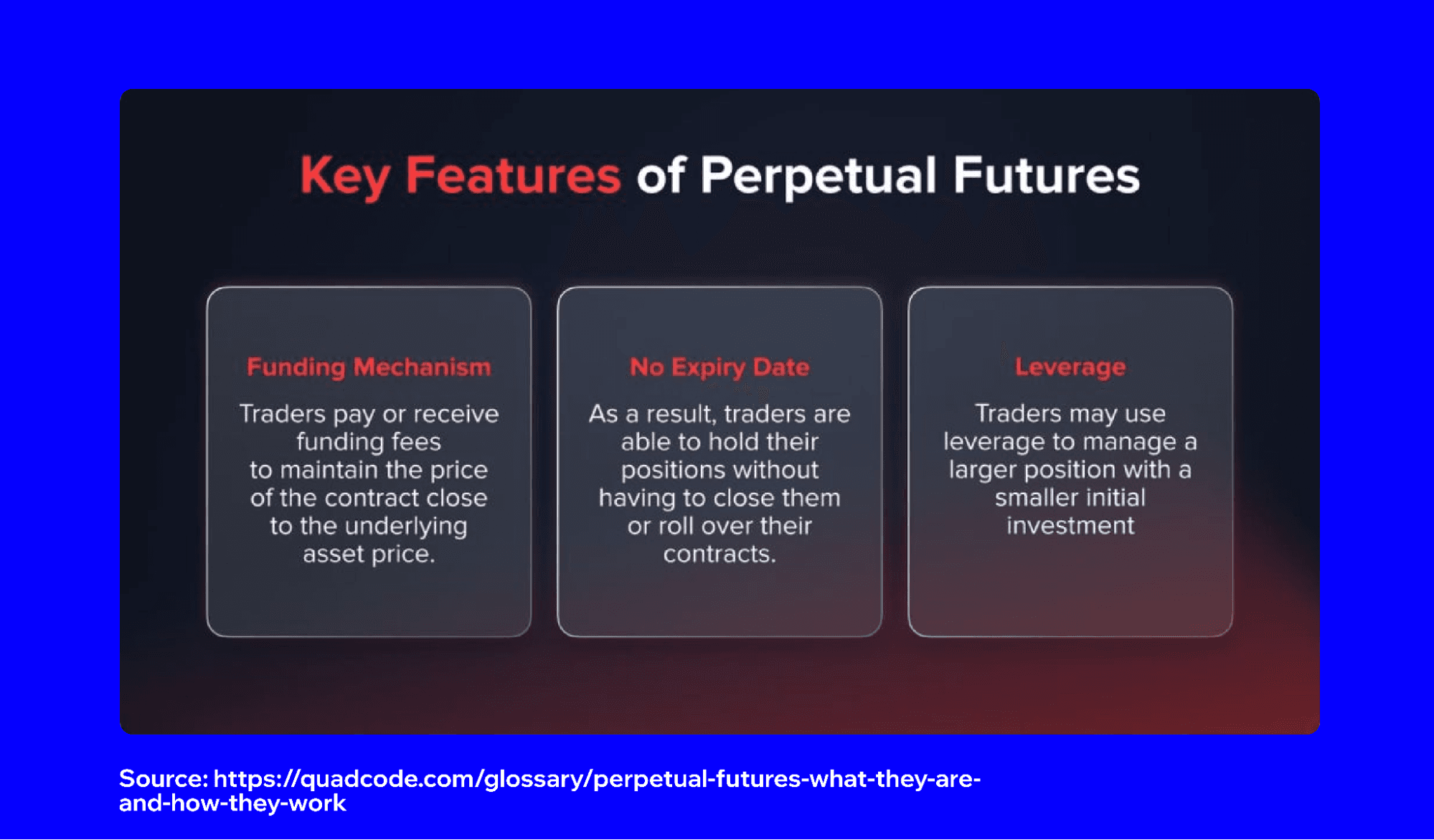
Traditional futures contracts have expiration dates. When the contract expires, you must settle it. Perpetual futures are different. They have no expiration date, so you can hold your position for as long as you want. Perps are more flexible and closer to spot trading, with the added benefit of leverage.
When you trade perpetual futures, you take either a long position (betting the price will rise) or a short position (betting the price will fall). You only need to put down a fraction of the total position size as collateral, called margin. The rest comes from leverage. Perpetual trading markets use a funding rate mechanism to keep the contract price close to the actual spot price. When the perpetual contract trades above spot price, traders with long positions pay those with short positions. When it trades below, short traders pay long traders. Payment happens regularly and keeps the two prices aligned.
Understanding Leverage in Perpetual Trading
Leverage is a multiplier that lets you control a larger position than your actual capital. If you have $500 and use 10x leverage, you can open a position worth $5,000. Your $500 acts as margin or collateral for the trade.
Leverage amplifies your potential profits and losses. If the asset price moves 5% in your favor with 10x leverage, you make a 50% profit on your margin. If the price moves 5% against you, you lose 50% of your margin. The higher your leverage, the faster things can go either way.
Your margin is what keeps your position open. When the market moves against you, your margin decreases. If your margin falls below a certain threshold (maintenance margin), your position gets liquidated. With 40x leverage, you only have about 2.5% cushion before liquidation. With 10x leverage, you have roughly 10% cushion. The math is simple: higher leverage equals less room for error.
What is Liquidation and How to Avoid It
Liquidation is the automatic closing of your position when your margin can no longer support it. When you get liquidated, you lose the collateral you put up for that trade. The exchange closes your position to prevent you from owing more money than you deposited. Every perpetual trading position has a liquidation price. If the market reaches this price, your position closes automatically. The liquidation price depends on three factors: your entry price, your leverage, and your margin amount. Higher leverage means your liquidation price sits closer to your entry price.
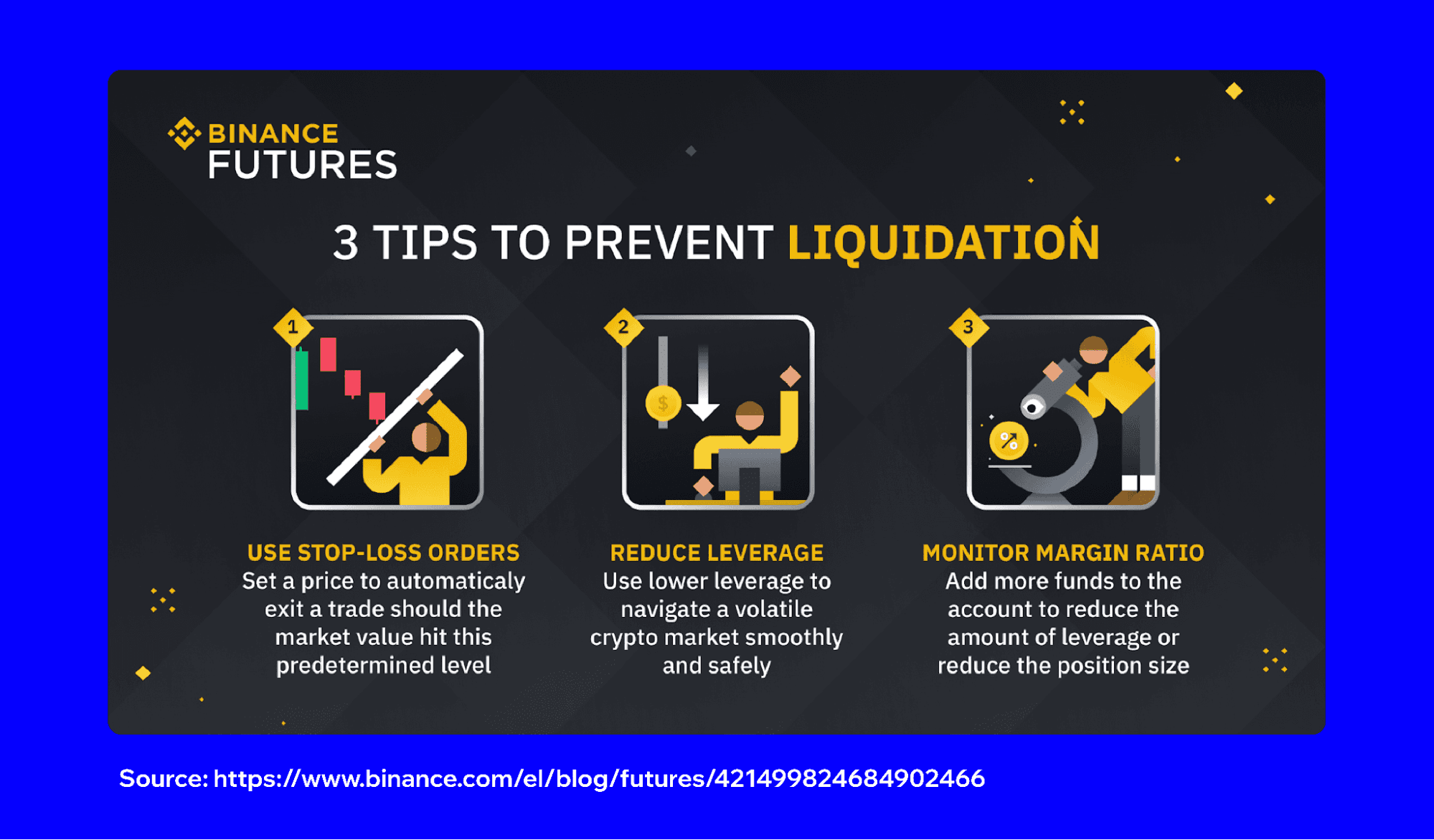
You can protect yourself from liquidation in several ways:
Use lower leverage: More leverage means less cushion. Starting with 2x-5x leverage gives you much more breathing room than 20x or 40x leverage.
Add more margin: If your position moves against you, you can add more collateral to your margin. Adding more collateral pushes your liquidation price further away and gives your trade more room to recover.
Set stop-loss orders: A stop-loss automatically closes your position at a predetermined price before you reach liquidation. You take a controlled loss instead of losing everything.
Monitor your positions regularly: Crypto markets move fast. Check your open positions frequently, especially if you're using higher leverage.
Remember that liquidation can happen faster with smaller, less liquid cryptocurrencies. These assets can experience extreme price swings that trigger liquidation even with conservative leverage. Stablecoins are often used as collateral because they maintain steady value.
Trading Futures in Trust Wallet
Trust Wallet gives you access to perpetual trading through its integration with decentralized exchanges. You maintain full control of your private keys while trading, unlike centralized exchanges where your funds sit in their custody.
Getting started with perps on Trust Wallet
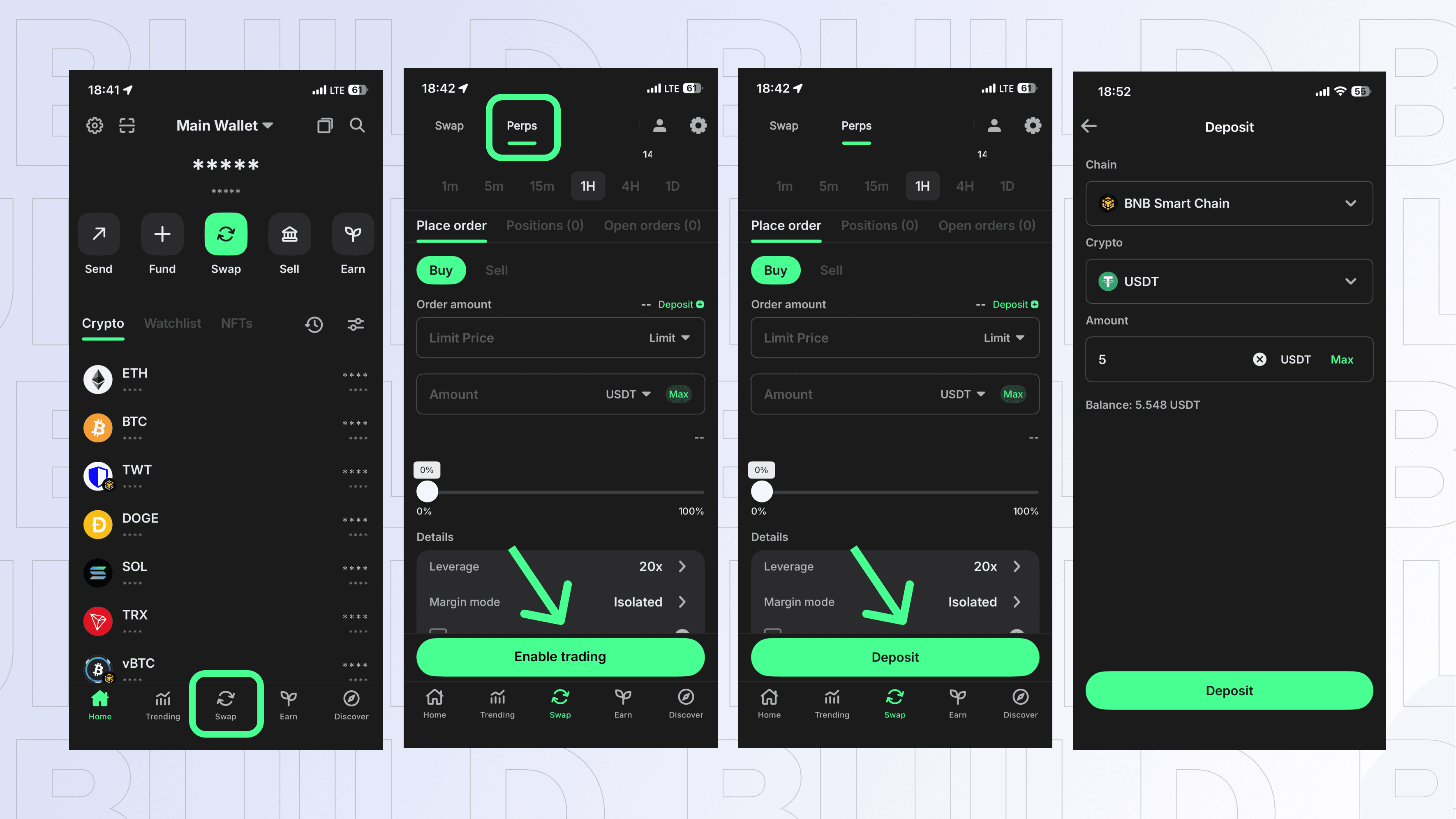
To get started with perps in Trust Wallet, simply select “Swap” in the bottom menu, then select “Perps”. Next, you’ll need to deposit funds and then open a position.
1. Deposit funds
Before opening a long or short position, deposit funds into your Perpetual account. These funds act as your margin — the collateral that supports your open positions and absorbs potential losses.
Select Swap, then choose the Perps tab.
If it’s your first time using the feature, you’ll need to “Enable trading”, and complete that quick process.
Next, deposit funds to be used as collateral. Select “Deposit”, choose the chain, asset, and amount.
2. Open a position
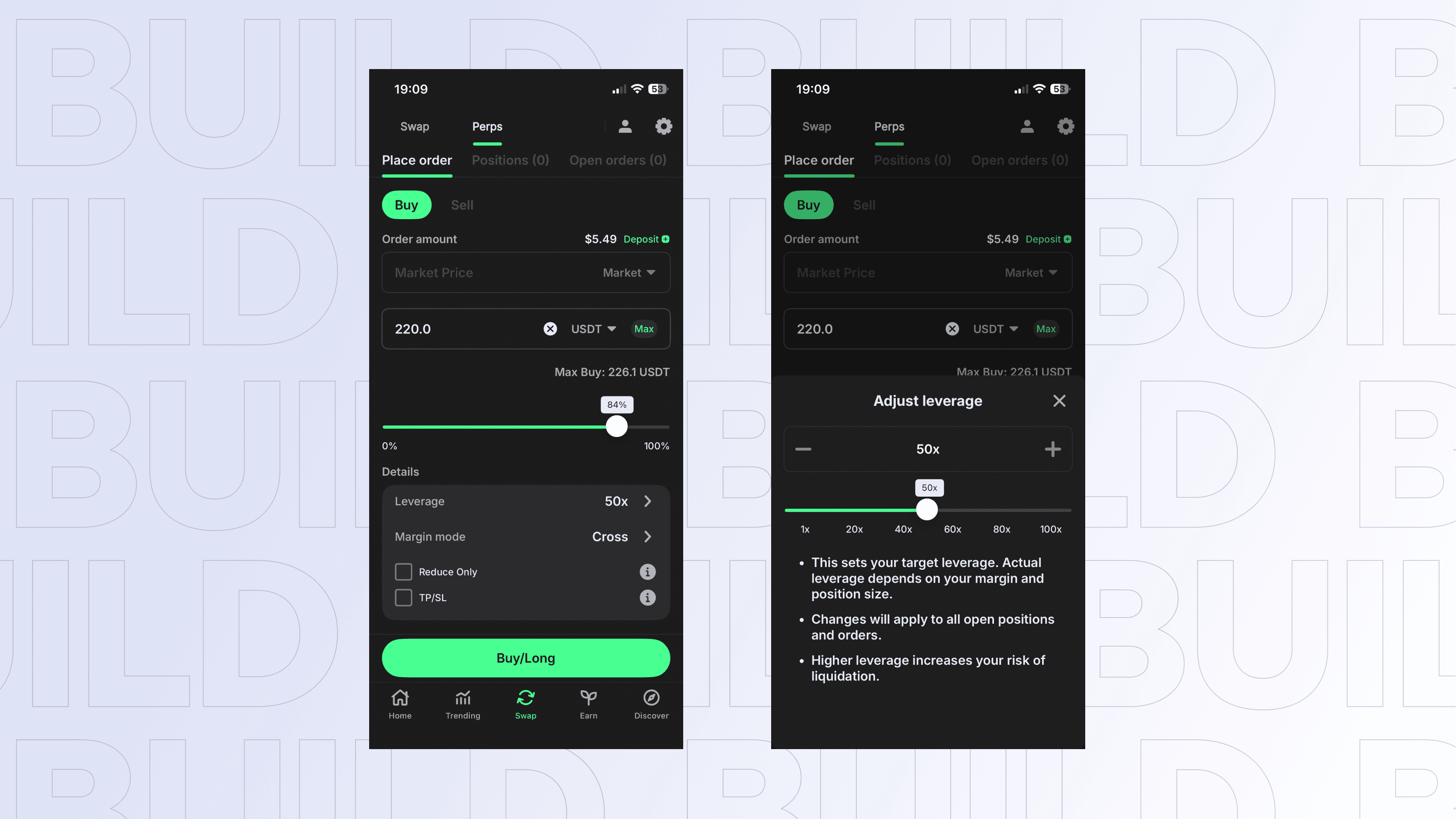
Next you’ll choose whether you want to go long (Buy/Long) or go short (Sell/Short), then set up your trade.
Select the Buy or Sell button.
Choose whether you want to open the position as a Market or Limit order. Then choose your leverage, position size, and adjust the other settings to your liking.
Once you’re satisfied with your trade setup, confirm and place your trade.
Note: Perpetuals are not available to users in the United Kingdom or the United States.
Closing Thoughts
Perpetual trading offers powerful tools for crypto traders, but power comes with responsibility. The combination of leverage and volatile crypto markets means you can make or lose money quickly.
Trust Wallet brings perpetual trading to your self-custody wallet, giving you the best of both worlds: advanced trading features and complete control over your assets. You don't have to trust a centralized exchange with your funds while you trade. Your private keys stay with you.
Disclaimer: Perpetuals trading lets you take long or short positions with leverage, but it also carries higher risk due to market volatility. Please trade responsibly and only with funds you can afford to lose.
Access to Perpetuals is available only in supported regions, and is not available to users in the United States or the United Kingdom, and may be restricted in other jurisdictions.
Always DYOR. Enabled by third-party decentralized protocols (such as Aster), with Trust Wallet providing a non-custodial interface for access. Content is for informational purposes and not investment advice. Web3 and crypto come with risk. Please do your own research with respect to interacting with any Web3 applications or crypto assets. View our terms of service.
Join the Trust Wallet community on Telegram. Follow us on X (formerly Twitter), Instagram, Facebook, Reddit, Warpcast, and Tiktok
Note: Any cited numbers, figures, or illustrations are reported at the time of writing, and are subject to change.